Understanding Your Right to Report Unsafe Working Conditions in California
Key Takeaways: California Labor Code § 6310 protects employees from retaliation when they report unsafe working conditions, whether through internal complaints to a supervisor or reports to Cal/OSHA. Protected activity is broad and requires only a reasonable, good-faith belief that a hazard exists, you do not have to prove an actual violation occurred. Retaliation covers far more than termination, including demotion, reduced hours, suspension, denial of benefits, negative evaluations, harassment, and even threats. Section 6310 works alongside California’s general whistleblower statute (§ 1102.5), state enforcement agencies, and often parallel federal remedies enforced by OSHA. Remedies can include a burden-of-proof shift to the employer, injunctive relief, statutory civil penalties, and private suits for damages, though deadlines vary significantly and some federal claims must be filed within 30 days. Because these cases turn on timing and documentation, acting quickly and preserving evidence is essential.
What Protected Safety Activity Really Looks Like
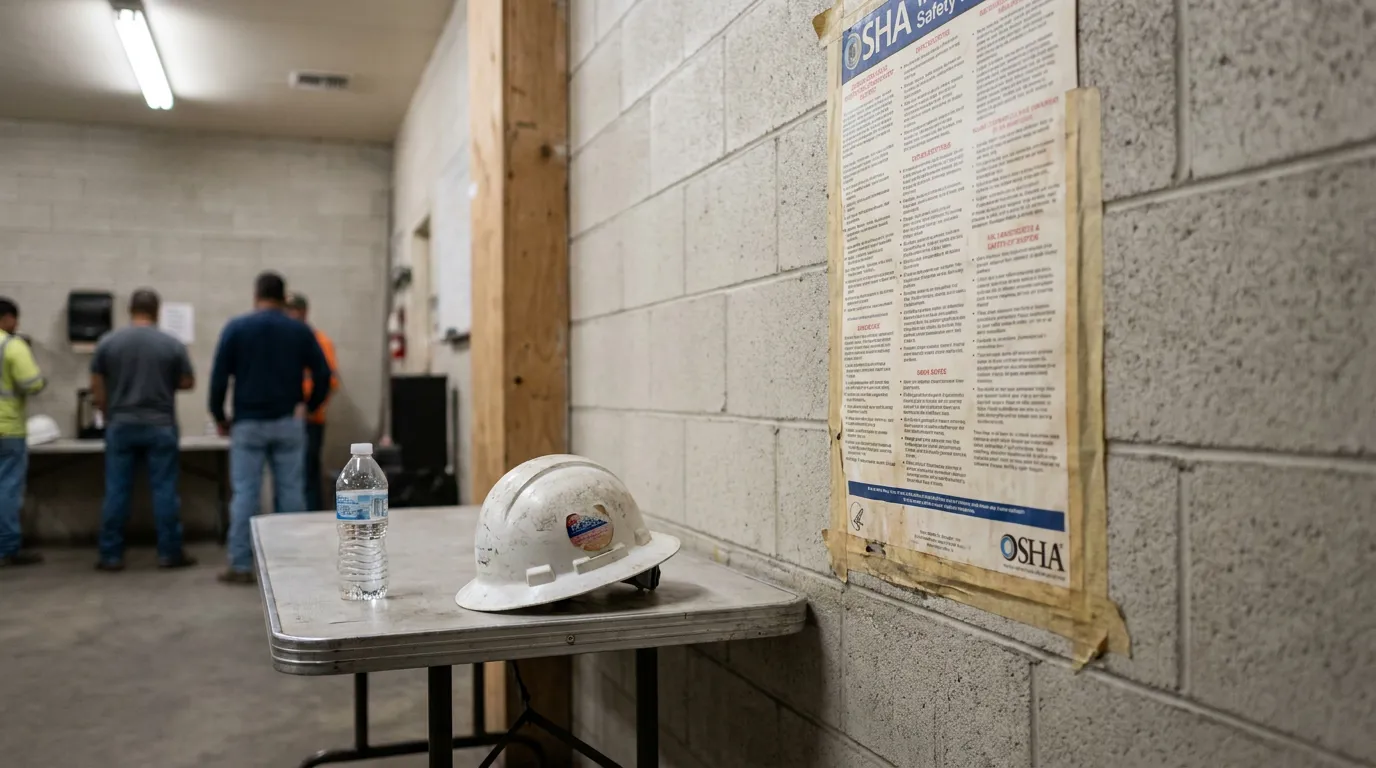
Protected activity is broader than most workers assume and does not require filing a formal government complaint. Federal enforcement materials list filing a complaint with OSHA, filing with another government agency, and complaining to management about unlawful conditions as protected bases for retaliation claims. This mirrors California’s approach, where reporting a hazard directly to a supervisor can be just as protected as calling a state agency. The key is that you engaged in good-faith workplace hazard reporting, not that you followed one particular channel.
California frames whistleblowing broadly, which strengthens your position. Federal guidance defines whistleblowers as employees who report misconduct or illegal activity committed by their employers, consistent with the safety-reporting protections in California Labor Code § 6310 (official source: leginfo.legislature.ca.gov). This matters because you generally do not have to be right that a violation occurred. Under California’s whistleblower-friendly framework, an employee needs only a reasonable, good-faith belief that a problem exists.
💡 Pro Tip: Document your safety report in writing whenever possible. A dated email or text to a supervisor creates a clear record of your protected activity and timing, which can be critical if retaliation follows.
What Counts as Retaliation Under Labor Code 6310
A retaliation claim generally requires an adverse employment action, and that category is wider than just being fired. Federal complaint materials list examples that closely track what California treats as retaliation, including termination or layoff, discipline, demotion or reduced hours, suspension, denial of benefits, failure to promote, negative performance evaluations, and harassment or intimidation. Even a threat to take any of those actions can qualify.
Common Forms of Adverse Action
Recognizing retaliation early helps you preserve evidence and act within deadlines. Employees who exercise their employee safety rights often experience one or more of the following:
- Termination, layoff, or forced resignation shortly after a safety complaint
- Demotion, reduced hours, or schedule changes that cut pay
- Suspension, formal discipline, or denial of promotion
- Unwarranted negative performance evaluations
- Harassment, intimidation, or explicit threats
Timing frequently tells the story in California retaliation cases. When an adverse action closely follows protected activity, that sequence can support an inference of retaliatory motive. California law presumes retaliation where an employee is disciplined or discharged within 90 days of protected activity, though the employer may offer a legitimate, nonretaliatory reason, at which point the employee must show the action was still retaliatory. Preserving emails, texts, schedules, and performance records is essential.
💡 Pro Tip: Keep copies of your positive reviews and clean disciplinary history from before you reported. A sudden shift in treatment after raising safety concerns can be powerful evidence.
How State and Federal Safety Protections Overlap
California’s Labor Code 6310 is one layer of protection, and a parallel federal layer often exists simultaneously. Congress has enacted many separate whistleblower and employee protection statutes, several of which are enforced by OSHA, as detailed in a comprehensive federal whistleblower statutes compilation. For workers reporting unsafe conditions, this overlap can mean both state and federal remedies may be available.
The State Whistleblower Statute Works Alongside 6310
California’s general whistleblower statute reinforces safety-specific protections. California Labor Code § 1102.5 (official source: leginfo.legislature.ca.gov) prohibits retaliation against employees who disclose information they have reasonable cause to believe reveals a legal violation, whether to a government agency or to a person with authority over the employee, a structure explained in this analysis of Labor Code 1102.5 protections. This parallels Section 6310’s coverage of both internal and Cal/OSHA safety complaints, giving employees overlapping paths to challenge retaliation.
California Backs Reporting With Real Enforcement
Your complaint is part of a larger enforcement system. State health authorities have statutory authority to enter workplaces to investigate hazards. Under California Health & Safety Code § 105175 (official source: leginfo.legislature.ca.gov), the state department maintains an occupational health and disease-prevention program and has access without delay to any place of employment during regular working hours to conduct investigations. California has also declared under California Labor Code § 90.5 (official source: leginfo.legislature.ca.gov) its policy to vigorously enforce minimum labor standards so employees are not required to work under substandard, unlawful conditions, and the Labor Commissioner maintains a field enforcement unit with an office in Los Angeles.
| Process | Purpose | Where It Goes |
|---|---|---|
| Cal/OSHA hazard complaint | Get an unsafe condition investigated | Cal/OSHA (Cal. hotline / DIR) |
| Federal safety complaint | Report a hazard federally | OSHA hotline (800) 321-6742 |
| 6310 / 98.7 retaliation claim | Challenge punishment for reporting | Labor Commissioner or civil court |
Reporting a hazard and reporting retaliation are separate processes. Workers who have not been retaliated against but want a hazard investigated file a safety and health complaint using the OSHA hotline at 800-321-6742. If you have suffered an adverse action, you can pursue a retaliation claim and may also file an OSHA whistleblower complaint.
Remedies, Deadlines, and Practical Limits
California’s Labor Code carries meaningful procedural advantages for retaliated-against workers. These include a burden-of-proof shift to the employer and the availability of injunctive relief under California Labor Code §§ 1102.6 and 1102.61, 62 (official source: leginfo.legislature.ca.gov). These tools can be significant, because they may require the employer to prove by clear and convincing evidence that it would have taken the same action for legitimate, independent reasons.
Administrative penalties exist, but they have limits worth understanding. Under California Labor Code § 1102.5(f) (official source: leginfo.legislature.ca.gov), any employer is liable for a civil penalty not exceeding $10,000 per employee for each violation, awarded to the employee who was retaliated against, this is a penalty recoverable through legal action, rather than a flat fine independently imposed by the Labor Commissioner. Because that per-violation penalty is capped and does not by itself make an employee whole, private suits for damages and injunctive relief are often the more meaningful remedy.
💡 Pro Tip: Watch the calendar closely. If you are considering a federal claim under Section 11(c) of the OSH Act, the deadline can be as short as 30 days from the adverse action, far shorter than typical California timelines.
Deadlines vary by statute, and courts generally interpret extensions narrowly. Federal filing deadlines range from 30 to 180 days depending on the statute, and Section 11(c) of the OSH Act requires a complaint within 30 days of the adverse employment action. California’s Labor Code timelines for safety-retaliation claims are generally longer than federal timelines. Under Labor Code Section 98.7, employees have six months to file a complaint with the Labor Commissioner (extendable for good cause), and up to three years to file a direct civil lawsuit, but you should not assume tolling or a discovery rule will extend your deadline, because such exceptions apply only in limited circumstances. For a fuller picture, employees can review this whistleblower acts reference and consider speaking with counsel about their rights, much like workers researching whistleblower protections in other contexts.
Frequently Asked Questions
1. Does Labor Code 6310 protect me if I only complained to my boss?
Yes, internal complaints are generally protected. Section 6310 covers oral and written safety complaints made to an employer, not just those filed with a government agency. Complaining to management about unsafe or unlawful conditions is recognized as protected safety activity.
2. What if it turns out there was no actual safety violation?
You generally do not have to be right to be protected. California applies a reasonable-cause standard, meaning you need a reasonable, good-faith belief that a problem existed. The focus is on the reasonableness of your belief, not whether a violation was ultimately proven.
3. Can I pursue both a state and a federal retaliation claim?
In many cases, both may be available. California’s protections operate alongside federal statutes enforced by OSHA. Because the federal deadline can be as short as 30 days, acting quickly helps preserve every option.
4. What counts as retaliation besides being fired?
Retaliation includes far more than termination. Demotion, reduced hours, suspension, denial of benefits, negative evaluations, harassment, and even threats to take those actions can qualify.
5. How much time do I have to act?
Deadlines depend on which claim you pursue. Federal deadlines can range from 30 to 180 days, while California timelines are often longer, generally six months to file a complaint with the Labor Commissioner under Labor Code Section 98.7 and up to three years to file a direct civil lawsuit. Courts read tolling and discovery exceptions narrowly, so confirm your deadline promptly.
Protecting Your Rights After Reporting Unsafe Work
Reporting a hazard should never cost you your livelihood, and California law reflects that principle. Labor Code 6310 protects employees who raise safety concerns, whether internally or through Cal/OSHA, and it works together with the state’s general whistleblower statute, its enforcement agencies, and often parallel federal remedies. Because these claims turn on timing, documentation, and specific facts, understanding your employee safety rights early can make a real difference. If you also have concerns about pay tied to your treatment, our labor code 6310 lawyer team can help you evaluate the full scope of your rights.
If you were punished for reporting unsafe working conditions anywhere in California, MSD Lawyers is ready to review your case with discretion and care. Call 213-401-0823 or request a consultation today to protect your rights and your future.