Many Los Angeles employees assume sexual harassment must happen multiple times before crossing a legal line. That assumption is wrong. Under California’s Fair Employment and Housing Act (FEHA), a single incident can support a legal claim if sufficiently severe. California courts apply a “severe or pervasive” standard, notice the word “or.” Harassment need not be both. A one-time act may be actionable if severe enough to meet the legal threshold. Understanding this distinction matters if you experienced something deeply wrong at work, even if it only happened once.
If you believe you experienced workplace sexual harassment, MSD Lawyers can help you understand your legal options. Call 213-401-0823 or request a consultation to discuss your situation.
What Qualifies as Severe or Pervasive Sexual Harassment Under California Law
California uses a two-part legal standard to evaluate hostile work environment claims. Under CACI Jury Instruction 2521A, sexual harassment must be “sufficiently severe or pervasive to alter the conditions of the victim’s employment and create an abusive working environment.” This standard originates from federal Title VII case law, which California courts adopted for FEHA claims. The critical takeaway: “severe” and “pervasive” function as alternatives. A pattern of less serious conduct may qualify as pervasive, while a single egregious act may qualify as severe.
The standard has both objective and subjective components. A reasonable person in the plaintiff’s circumstances must find the work environment hostile or abusive, and the victim must personally perceive it that way. Courts weigh the totality of circumstances, including the conduct’s nature and frequency, whether it was physically threatening or humiliating, and whether it unreasonably interfered with work performance. If you experienced conduct that left you feeling unsafe or unable to do your job, that reaction is legally relevant. Learn more about what qualifies as severe or pervasive harassment and how California courts evaluate these claims.
💡 Pro Tip: Document incidents immediately, including dates, times, locations, witnesses, and exact words or actions. Detailed notes can serve as powerful evidence in a California FEHA harassment claim.
When a Single Incident Is Enough to File a Claim
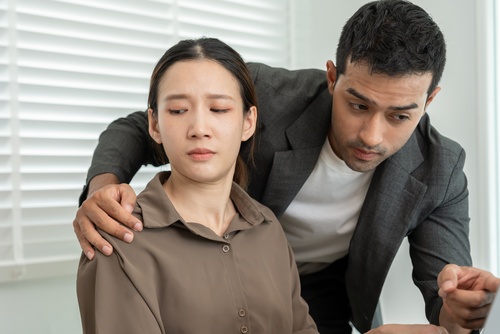
You do not need to endure repeated harassment before the law protects you. Under California’s severe or pervasive standard, one act of physical assault, one instance of a supervisor conditioning job benefits on sexual favors, or one deeply degrading incident may suffice. Courts examine the conduct’s gravity, not merely its frequency. California Government Code § 12923(b) expressly recognizes that a single incident can create a triable issue regarding hostile work environment existence, provided the behavior is extreme enough.
You do not need to lose your job or suffer a demotion to bring a valid claim. Under California Government Code § 12940(j)(1) (official source: leginfo.legislature.ca.gov), loss of tangible job benefits is not necessary to establish harassment. The hostile or offensive conduct itself can be sufficient grounds for a legal claim.
💡 Pro Tip: If your employer dismissed your complaint saying “it only happened once,” that response does not reflect California law. One-time harassment can be illegal, and an employer’s failure to take your report seriously may support your claim.
Types of Conduct That May Constitute Sexual Harassment
Sexual harassment under California law covers a broader range of behavior than many realize. State regulations define sexual harassment as unwanted sexual advances or visual, verbal, or physical conduct of a sexual nature, including gender-based harassment even when harasser and victim are the same sex. Under California Government Code § 12940(j)(4)(C) (official source: leginfo.legislature.ca.gov), sexually harassing conduct need not be motivated by sexual desire to be illegal.
Prohibited conduct falls into three categories:
- Visual conduct: leering, sexual gestures, displaying sexually suggestive objects or pictures
- Verbal conduct: derogatory comments, sexual slurs, graphic commentary about a person’s body, sexually degrading jokes, or propositions
- Physical conduct: unwanted touching, sexual assault, physical interference with movement, or blocking someone’s path
The law also protects against harassment based on gender identity, gender expression, and sexual orientation. Under California Government Code § 12950.1(a)(3) (official source: leginfo.legislature.ca.gov), mandatory employer training must cover these categories, reflecting California’s broad interpretation of protected harassment.
| Type of Conduct | Examples | Can a Single Incident Suffice? |
|---|---|---|
| Visual | Leering, sexual gestures, explicit images | Yes, if sufficiently severe |
| Verbal | Sexual comments, slurs, degrading jokes | Yes, depending on severity |
| Physical | Unwanted touching, assault, blocking | Yes, often meets the severity threshold |
| Quid pro quo | Job benefits conditioned on sexual favors | Yes, generally one incident is enough |
💡 Pro Tip: Harassment based on pregnancy, childbirth, gender identity, or gender expression falls under the same FEHA protections as traditional sexual harassment.
Who Can Be Held Liable for Workplace Sexual Harassment in Los Angeles
California holds both employers and individual harassers accountable. Under California Government Code § 12940(j)(3) (official source: leginfo.legislature.ca.gov), individual harassers can be held personally liable for their conduct, regardless of whether the employer knew about it or took corrective action. This makes California’s framework significantly stronger than federal law.
Employer Obligations Under FEHA
Employers have an affirmative duty to prevent harassment before it occurs. Under California Government Code § 12940(j)(1) (official source: leginfo.legislature.ca.gov), an entity must take “all reasonable steps to prevent harassment from occurring.” Employers cannot claim ignorance as a defense. For harassment provisions under § 12940(j)(4)(A), “employer” includes any person regularly employing one or more persons, meaning harassment protections apply in all workplaces regardless of size.
Training Requirements Signal Legal Seriousness
California requires employers with five or more employees to provide mandatory sexual harassment prevention training. Under California Government Code § 12950.1(a)(1) (official source: leginfo.legislature.ca.gov), supervisors must receive at least two hours of training, and nonsupervisory employees must receive one hour, once every two years. Under § 12950.1(c), failure to provide training does not, by itself, result in employer liability, and compliance does not insulate an employer from liability. However, an employer’s failure to train may be considered as part of broader evidence regarding whether it met its duty to prevent harassment.
💡 Pro Tip: Request documentation of your harassment prevention training. If your employer never provided mandatory training, that failure may be relevant evidence showing the company did not meet its broader duty to prevent harassment under FEHA.
How to Protect Your Rights After Experiencing Harassment
Taking prompt action helps preserve your legal options. If you experienced a hostile work environment in Los Angeles, consider these steps:
- Document the incident in detail, including dates, locations, witnesses, and specific conduct
- Report harassment through your employer’s internal complaint process, and keep copies of written reports
- Save relevant text messages, emails, photographs, or other evidence
- File a complaint with the California Civil Rights Department (CRD), which enforces FEHA
- Be mindful of filing deadlines, as both state administrative and federal EEOC time limits apply
Retaliation for reporting harassment is separately unlawful under FEHA. If your employer fired you, demoted you, reduced your hours, or took other adverse action after you reported harassment, that retaliation may give rise to an additional legal claim.
💡 Pro Tip: Do not wait to see if harassment stops before taking action. Delays in reporting can affect your credibility and may complicate meeting filing deadlines.
Understanding the Difference Between Severe and Pervasive Harassment
These two legal concepts serve different functions in a FEHA harassment claim. “Severe” refers to the intensity of a single act or small number of acts. Physical assault or a supervisor demanding sexual favors for a promotion generally qualifies as severe without repetition. “Pervasive” refers to conduct that, while perhaps less extreme per incident, occurs with enough frequency to poison the work environment. Repeated sexual jokes, ongoing leering, or daily degrading comments can meet the pervasive standard even if no single incident qualifies as severe. To meet the pervasive standard, conduct generally cannot be merely occasional, isolated, or trivial.
Courts examine the totality of circumstances, and every case turns on specific facts. Factors such as the relationship between harasser and victim, whether the harasser held supervisory authority, and the physical nature of conduct all influence the analysis. A sexual harassment lawyer in Los Angeles can evaluate your situation’s specific facts.
Frequently Asked Questions
1. Can a single incident of sexual harassment support a legal claim in California?
Yes. Under the FEHA standard, harassment must be severe or pervasive. Because the law treats these as alternatives, one sufficiently severe incident, such as physical assault or quid pro quo demand, can support a viable claim without repeated conduct. California Government Code § 12923(b) expressly recognizes that a single incident can create a triable issue regarding hostile work environment existence.
2. Do I need to be fired or demoted to have a sexual harassment claim?
No. Under California Government Code § 12940(j)(1) (official source: leginfo.legislature.ca.gov), loss of tangible job benefits is not required to establish harassment. The hostile or abusive conduct itself may be sufficient.
3. Can I hold the individual harasser personally liable in California?
Under California Government Code § 12940(j)(3) (official source: leginfo.legislature.ca.gov), individual harassers may be held personally liable for their conduct, regardless of whether the employer was aware of the harassment or attempted to correct it. This is a significant protection under California law.
4. What is the deadline for filing a sexual harassment complaint in California?
Filing deadlines depend on whether you pursue a state administrative complaint through the CRD or a federal complaint through the EEOC. Because missing a deadline can bar your claim entirely, consulting an attorney promptly is important.
5. Does California’s harassment law only apply to large employers?
No. For harassment provisions under § 12940(j)(4)(A), “employer” includes any person regularly employing one or more persons, meaning harassment protections apply to virtually all California workplaces regardless of size. The mandatory training requirement applies to employers with five or more employees, but the underlying prohibition against harassment is broader.
Taking the Next Step to Protect Your Rights
California law provides strong protections for employees who experience sexual harassment, and those protections do not require enduring repeated misconduct before taking legal action. Whether you experienced a single severe incident or an ongoing pattern of hostile behavior, the law may be on your side. What matters most is understanding your rights and taking action to preserve them.
If you experienced sexual harassment at work in Los Angeles, MSD Lawyers is ready to listen and help you evaluate your legal options. Call 213-401-0823 or schedule a consultation today to take the first step toward holding the responsible parties accountable.