Understanding When Your California Alternative Workweek Schedule May Be Invalid
Key Takeaways: A California alternative workweek schedule is invalid when an employer fails to follow strict statutory adoption steps, triggering daily overtime obligations. A lawful schedule requires a written proposal specifying regular workdays and hours, full pre-vote disclosure of wage and benefit effects, a duly noticed meeting at least 14 days before the vote, and a secret ballot with two-thirds approval held at the worksite during working hours. Results must be reported to the Division of Labor Standards Enforcement within 30 days, and the design must never build in scheduled overtime beyond recognized 4/10/40 and 9/8/80 structures (with narrow industry exceptions, such as 12-hour healthcare schedules). Common defects include improper elections, coercion, inadequate disclosure, late reporting, post-adoption pay cuts, and 9/8/80 timing errors. Even a valid schedule doesn’t eliminate all overtime obligations.
An alternative workweek schedule becomes invalid in California when an employer skips or mishandles even one required adoption step. Without a lawfully adopted schedule, daily overtime rules return and your employer may owe you time-and-a-half or double time. California Labor Code § 511 permits daily overtime to be waived only through a properly adopted schedule (official source: leginfo.legislature.ca.gov). If your longer shifts were never approved correctly, you may be owed unpaid wages.
If you suspect your longer shifts lack a valid schedule, MSD Lawyers can help you understand your rights. Call 213-401-0823 or request a consultation to have your situation reviewed.

How an Alternative Workweek Schedule California Law Actually Defines It
A valid schedule has a narrow legal definition that many employers misunderstand. California defines an alternative workweek schedule as any regularly scheduled workweek requiring work beyond eight hours in a 24-hour period. A compliant schedule generally allows up to 10 hours per day, or up to 12 hours in limited industries such as healthcare, within a 40-hour week without triggering daily overtime, under 8 CCR § 11110 (official source: dir.ca.gov). Because controlling rules come from the wage order governing your specific industry, precise requirements vary, and schedules built outside those parameters fall outside the safe harbor entirely. You can review the governing regulation through the California wage order text.
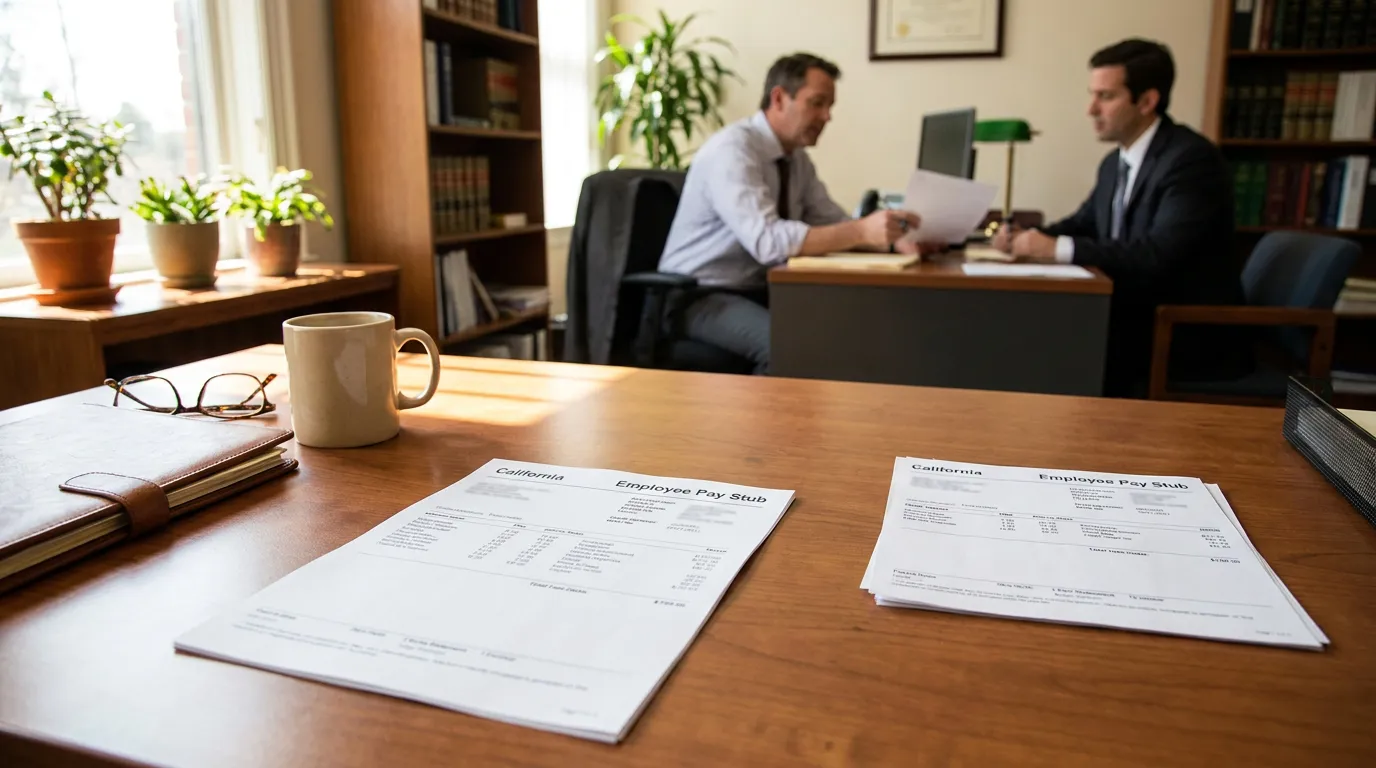
💡 Pro Tip: Keep your own copy of every posted schedule, ballot notice, and pay stub. These records are often the clearest proof of whether an employer followed the required steps.
The Election Defects That Most Often Void a Schedule
A failed or improper election is the most common reason a schedule collapses. Adoption requires a secret ballot vote held before work is performed, at the worksite during working hours, with at least a two-thirds vote of affected employees in a readily identifiable work unit under 8 CCR § 11110 § 3(C)(2) (official source: dir.ca.gov). Miss any condition and the schedule generally cannot serve as an overtime exemption.
Who is allowed to vote is frequently mishandled. Only members of the affected work unit may vote, the ballot must be secret, and because approval requires two-thirds of the affected employees in the work unit, not merely two-thirds of those who cast ballots, a work-unit member who doesn’t vote effectively counts against approval. According to rules that accompany these schedules, employers must also wait at least 30 days after announcing final results and make reasonable efforts to offer an eight-hour day to eligible employees who cannot work the schedule.
The secret ballot election must be conducted at the worksite during regular working hours at the employer’s cost, and an employer may not intimidate or coerce employees to vote for or against the proposed schedule. Guidance on implementing these schedules explains that written disclosures must be mailed to employees who don’t attend informational meetings.
Structural Flaws in the Proposal Itself
Even a clean election cannot save a defective proposal. The proposal must be a written employer document specifying regularly recurring workdays and hours, must provide at least four hours of work in any shift, and must give at least two consecutive days off within the workweek under 8 CCR § 11110 § 3(B)(1)-(2) and § 3(C)(1) (official source: dir.ca.gov). A vague or shifting proposal that fails these requirements is vulnerable to challenge.
Disclosure, Notice, and Reporting Failures
Inadequate pre-vote disclosure voids a schedule outright. The employer must provide written disclosure of the wage, hour, and benefit effects of the proposed change, hold a duly noticed meeting at least 14 days before the vote, mail the disclosure to non-attendees, and translate it when 5% or more of affected employees primarily speak another language, under 8 CCR § 11110 § 3(C)(3), which states that failure to comply makes the election null and void (official source: dir.ca.gov).
Reporting the results to the state is a separate obligation. Employers must report election results to the Division of Labor Standards Enforcement within 30 days after results become final, per California Labor Code § 511(e) (official source: leginfo.legislature.ca.gov), and the schedule cannot begin until at least 30 days after results are announced. You can see how the state catalogs adopted schedules through the DLSE election results database. The full Labor Code Section 511 text lays out the reporting duty.
Common invalidating facts include a non-secret ballot, a vote held outside working hours, post-adoption rate reductions, and late filing. In certain industries, a new vote is required if the work unit that adopted the schedule grows by 50 percent. Practical analysis of AWS pitfalls outlines these risks. For more background, the firm’s employee legal resources can help you frame your questions before speaking with counsel.
💡 Pro Tip: If you never received a written disclosure or notice of a meeting at least two weeks before a vote, that gap alone may signal an invalid schedule.
Overtime You May Still Be Owed Even Under a Valid Schedule
A valid schedule does not hand employers a blanket overtime exemption. Even with a properly adopted schedule, employers lose the exemption for work performed outside the adopted schedule, and an employer may not reduce an employee’s regular rate of pay as a result of adopting the schedule under 8 CCR § 11110 § 3(B)(1) and (3) (official source: dir.ca.gov). Overtime is still owed for hours beyond the adopted schedule and beyond 40 hours in a workweek.
| Hours worked | Pay rate that generally applies |
|---|---|
| Up to the scheduled hours (10-hour day) | Regular rate |
| Beyond scheduled hours, up to 12/day or over 40/week | Time-and-a-half |
| Beyond 12 hours per day | Double time |
| Beyond 8 hours on an unscheduled day | Double time |
Employer conduct after adoption is regulated too. Pay cannot be reduced because of the adoption, repeal, or nullification of the schedule, religious-observance conflicts must be reasonably accommodated, and reasonable efforts must be made to provide an eight-hour schedule to eligible voters who cannot work the alternative arrangement under 8 CCR § 11110 § 3(B)(4)-(6) and California Government Code § 12940(l) (official source: dir.ca.gov; leginfo.legislature.ca.gov).
Design and Timing Flaws That Break the Safe Harbor
A schedule cannot be designed to manufacture overtime. State guidance is direct that a non-standard schedule must not exceed 40 hours of work in a workweek and that arrangements resulting in scheduled overtime are strictly prohibited, per CalHR HR Manual § 1503 (official source: hrmanual.calhr.ca.gov).
The two most common structures carry technical traps. The most common recognized California structures are the 4/10/40 and the 9/8/80, with limited industries such as healthcare also permitting 12-hour schedules under their applicable wage orders. Under the 9/8/80, the workweek must begin and end four hours into the eight-hour day or day off, a technical requirement employers regularly get wrong, which can trigger daily overtime liability.
Common warning signs that a schedule may be invalid include:
- No secret ballot, or a vote held outside working hours or off-site
- Missing written disclosure or a meeting held fewer than 14 days before the vote
- A reduction in your hourly rate after the schedule took effect
- Results never reported to the state within 30 days
- A 9/8/80 workweek that does not start and end four hours into the eight-hour day
💡 Pro Tip: Compare your posted schedule against the 4/10/40 and 9/8/80 templates. A schedule that matches neither is worth having a lawyer review.
Frequently Asked Questions
1. Does an invalid schedule mean I am automatically owed overtime?
Not automatically, but it opens the door. When a schedule is void, standard daily overtime rules generally apply, meaning hours over eight in a day may be compensable. Whether you recover depends on your specific hours and records.
2. What if I voted "yes" but the process was flawed?
Your individual vote does not cure a defective process. If the employer failed to provide proper disclosure, skipped the required meeting, or coerced the vote, the election may still be null and void regardless of how you voted.
3. How far back can I claim unpaid overtime?
California wage claims are subject to time limits. Unpaid overtime claims generally fall under a multi-year statute of limitations, but civil deadlines differ from administrative filing deadlines. Act promptly rather than assume an extension applies.
4. Can my employer lower my pay after adopting a schedule?
Generally no. Pay cannot be reduced because of the adoption, repeal, or nullification of a schedule under 8 CCR § 11110 § 3(B)(4) (official source: dir.ca.gov). A rate cut tied to the schedule may itself be a violation.
5. Who can I talk to about a possible violation?
An employee-side wage attorney can assess whether the schedule was lawfully adopted. A lawyer can review your ballot notices, disclosures, and pay records to determine whether daily overtime should have been paid. A knowledgeable alternative workweek schedule california lawyer can explain your options.
Protecting the Overtime Pay You Have Earned
A California alternative workweek schedule is only valid when the employer follows every adoption step: a written proposal, full disclosure, a properly noticed meeting, a secret ballot with two-thirds approval held during working hours, timely reporting to the state, and a design that never builds in scheduled overtime. Miss any of those, and the schedule generally becomes invalid, restoring your right to daily overtime and often revealing unpaid wages.
If you believe your schedule was never lawfully adopted, MSD Lawyers is ready to review your records and pursue any overtime you may be owed. Call 213-401-0823 or contact us now to protect your rights and the wages you have earned.