When "Even" Rounding Isn’t Even: What California Workers Should Know
Key Takeaways: Yes, a rounding policy that looks fair can still shortchange your pay in California if, over time, it mostly favors the employer. Under the See’s Candy standard, rounding is generally allowed only if the policy is neutral on paper and in how it works out. Regularly clocking in a few minutes early and out a few minutes late could cost a full-time worker more than 50 hours of pay a year. In Donohue v. AMN Services, the California Supreme Court held that employers cannot round meal period punches. The Supreme Court is also reviewing Camp v. Home Depot, which asks whether rounding is allowed when an employer already records exact work time. Rounded-away minutes may lead to claims for unpaid minimum wage, overtime, meal break premiums, lower sick leave accrual, and penalties. Keeping your own records of real punch times and comparing them to your pay stubs can help you protect a potential claim.
A rounding policy can look perfectly fair on paper and still cost you money in California. Many employers round punches to the nearest five, six, or fifteen minutes. In theory, minutes lost on some days come back on others. In practice, the pattern of when you clock in and out decides who comes out ahead, and that is often the employer.
If your time records don’t match the hours you actually worked, MSD Lawyers can review your pay and time records and explain your options. Call 213-401-0823 or schedule a free consultation to talk through your situation confidentially.

How Time Clock Rounding California Rules Developed
No California statute or wage order expressly allows or prohibits rounding. The rule comes from case law. In See’s Candy Shops, Inc. v. Superior Court (2012) 210 Cal.App.4th 889, a California Court of Appeal held that an employer may round time if the policy is neutral on its face and is used in a way that does not, over time, fail to pay employees for all the time they actually worked. The California Supreme Court did not decide See’s Candy, and it has said it "has never decided the validity of the rounding standard articulated in See’s Candy".
Under the See’s Candy standard, a neutral rounding policy generally has to pass two tests. It must be neutral on its face, and neutral as applied, meaning it cannot consistently favor the employer over time. Vendor guides such as this overview of California rounding rules describe the same two-part test. A policy that rounds both up and down to the nearest quarter hour may pass the first test and still fail the second.
Why the Second Test Is Where Workers Often Lose Minutes
Real work patterns rarely look like a coin flip. Suppose you clock in at 8:53 for a 9:00 shift because your manager expects you on the floor at 9:00 sharp. A quarter-hour policy rounds that to 9:00. If you also tend to clock out a few minutes after your shift ends, those minutes may be rounded back down. Scholars writing about the unintended consequences of rounding have examined how neutral-looking rules can produce systematic pay shortfalls.
| Actual Punch | Rounded To (15-min rule) | Minutes Paid vs. Worked |
|---|---|---|
| In at 8:53 | 9:00 | 7 minutes lost |
| Out at 5:07 | 5:00 | 7 minutes lost |
| In at 9:06 | 9:00 | 6 minutes gained |
| Daily pattern of early in, late out | About 14 minutes lost per day |
Fourteen minutes a day adds up quickly. Over a full working year, that could mean more than 50 hours of lost wages for one employee, and potentially far more across a workforce. Whether a policy is unlawful as applied usually depends on the data for the whole affected group of workers.
💡 Pro Tip: Photograph or note your actual clock-in and clock-out times for a few weeks, then compare them to your pay stub. A consistent gap in one direction may suggest a rounding problem.
The Camp v. Home Depot Case and Where the Law Stands Now
The Camp v. Home Depot U.S.A., Inc. case challenged whether rounding should still be allowed when employers can track every minute. The plaintiff alleged that Home Depot’s practice of rounding total shift time to the nearest quarter hour resulted in unpaid minimum and overtime wages. The trial court sided with Home Depot under See’s Candy. The Court of Appeal reversed, concluding that rounding total time is not allowed when the employer records actual time and is able to pay by the minute. According to the court record, Camp lost about 470 minutes, or more than seven hours, over roughly 4 1/2 years because of the rounding policy.
The appellate decision did not ban rounding outright, but it questioned See’s Candy and asked the Supreme Court to step in. On February 1, 2023, the California Supreme Court granted a petition to review the decision. We were not able to confirm whether the Supreme Court has since issued a final ruling. Because the outcome could change California rounding law, workers should check the case’s current status with an attorney. Commentators, including this analysis of employee timecard rounding, have tracked the case closely.
Technology Is Weakening the Case for Rounding
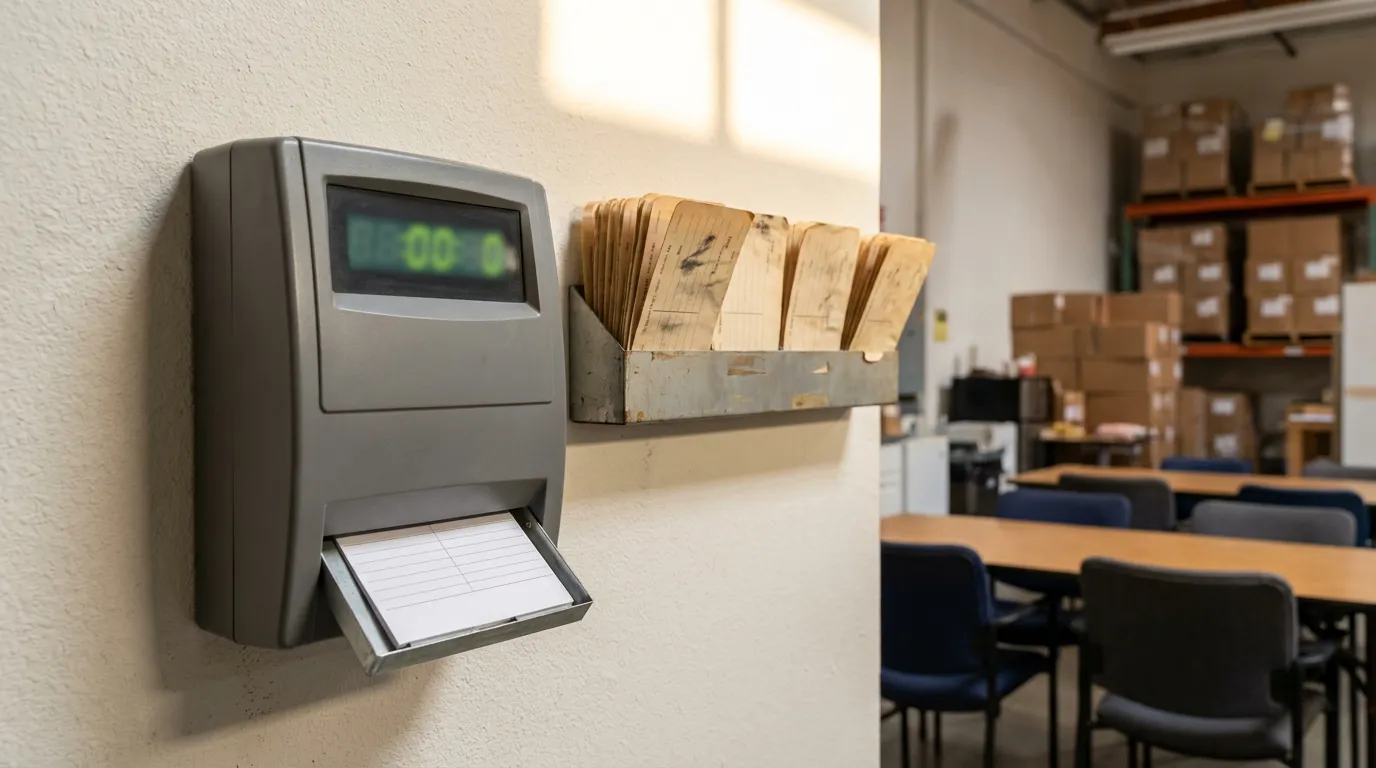
Rounding began when time clocks were mechanical and imprecise, and that justification is fading. Modern digital and biometric systems capture exact punches. As SHRM has noted, rounding faces more scrutiny as technology improves, because courts may ask why an employer rounds at all if it knows exactly when you worked.
Meal Breaks: Where Rounding Is Not Allowed
Under current California Supreme Court precedent, rounding meal period punches is not permitted. In Donohue v. AMN Services, LLC (2021) 11 Cal.5th 58, the Court held that "employers cannot engage in the practice of rounding time punches, that is, adjusting the hours that an employee has actually worked to the nearest preset time increment, in the meal period context." It also held that when time records show missed, short, or late meal periods, there is a rebuttable presumption of a violation.
A rounded punch can hide a short or late meal break. If you clocked out at 12:04 and back in at 12:31, a rounded record might show a full 30 minutes. If your employer did not provide a compliant meal period, you may be owed one additional hour of pay at your regular rate of compensation for each such workday under California Labor Code § 226.7 (official source: leginfo.legislature.ca.gov). Meal period timing requirements appear in California Labor Code § 512, found within the Labor Code wage and hour article (official source: leginfo.legislature.ca.gov). Certain waivers and exceptions may apply.
How Rounding Losses Become Labor Code Violations
Rounding that consistently trims your time may show up as unpaid minimum wage or overtime. The Labor Code requires at least minimum wage for all hours worked under California Labor Code §§ 1194 and 1197 (official sources: leginfo.legislature.ca.gov; leginfo.legislature.ca.gov). It also requires overtime under California Labor Code § 510 (official source: leginfo.legislature.ca.gov), generally for work over eight hours in a day, over 40 hours in a week, and on the seventh consecutive workday. Some exemptions and alternative workweek schedules may change these rules.
Unpaid wages are often not the only exposure an employer faces. California Labor Code § 90.5 sets up the Labor Commissioner’s field enforcement unit, which investigates and enforces minimum labor standards (official source: leginfo.legislature.ca.gov). Section 90.6 separately addresses tolling of the statute of limitations once that unit’s field investigation has begun. Depending on the facts, related claims may include:
- Liquidated damages for unpaid minimum wage, but not overtime, under California Labor Code § 1194.2 (official source: leginfo.legislature.ca.gov), which a court may reduce or deny if the employer shows good faith and reasonable grounds
- Waiting time penalties of up to 30 days’ wages when an employer willfully fails to pay all wages owed at separation under California Labor Code § 203 (official source: leginfo.legislature.ca.gov)
- Inaccurate wage statement claims under California Labor Code § 226 (official source: leginfo.legislature.ca.gov), which generally require a knowing and intentional violation that injured the employee
- Meal, rest, and recovery period premiums under California Labor Code § 226.7 (official source: leginfo.legislature.ca.gov)
- Claims under applicable IWC wage orders and local minimum wage or overtime laws
Rounding can also affect benefits tied to hours worked. Paid sick leave under California Labor Code § 246 generally accrues based on hours worked for sick leave (official source: leginfo.legislature.ca.gov), so underreported hours may reduce your accrual. For a broader look at what qualifies, see our guide to unpaid wages under California law.
California Takes Small, Systematic Losses Seriously
State policy calls for vigorous enforcement of minimum labor standards. Under California Labor Code § 90.5 (official source: leginfo.legislature.ca.gov), the Labor Commissioner enforcement policy aims to protect workers and keep law-abiding employers from being undercut by competitors who shortchange employees.
Timing rules can matter if the Labor Commissioner opens an investigation. Under Labor Code section 90.6 (official source: leginfo.legislature.ca.gov), the Labor Commissioner’s written notice to an employer that a field investigation has begun can toll the limitations period for covered claims for up to 12 months. This applies only in that administrative setting. It does not automatically extend the deadline for a private civil lawsuit, which has its own limitations periods, often three or four years depending on the claim.
Practical Steps to Protect Your Claim
Evidence often decides wage and hour cases, and much of it is in your employer’s hands. You can still take steps to protect yourself:
- Save every pay stub and any schedule you receive.
- Keep a personal log of your real start, end, and meal break times.
- Note any instructions to arrive early, stay late, or work through breaks.
- Request copies of your payroll and time records, which California law generally allows employees to inspect or copy within set deadlines.
💡 Pro Tip: Rounding is not the only way time disappears. Pre-shift security checks, booting up computers, and certain travel time pay situations may also count as compensable work.
Frequently Asked Questions
1. Is time clock rounding legal in California?
Rounding has generally been allowed under the See’s Candy standard if the policy is neutral on its face and as applied. However, the California Supreme Court agreed to review Camp v. Home Depot, so the law may change.
2. Can my employer round my meal break punches?
No. Under Donohue v. AMN Services, employers cannot round meal period time punches in California. A rounded meal punch that hides a short or late break may support a premium pay claim.
3. How do I know if a rounding audit would show I was underpaid?
Compare your actual punch times to the hours paid on your stubs over several pay periods. A consistent pattern of lost minutes may suggest a problem.
4. What can I recover if rounding cost me wages?
Depending on the facts, you may recover unpaid wages, overtime, interest, liquidated damages for minimum wage violations, meal break premiums, and certain statutory penalties.
5. Does rounding affect my coworkers too?
Often, yes. Because rounding policies usually apply company-wide, losses may affect many hourly workers, which may support class or PAGA representative claims in some cases. An arbitration agreement may limit how some of these claims can be brought.
Getting Clear Answers About Your Paycheck
A rounding policy that appears balanced can still leave you short over time. California courts generally require rounding to be neutral in practice, have prohibited rounding of meal periods, and are reconsidering whether rounding should be allowed when employers track every minute. If your pay stubs consistently show fewer hours than you worked, the gap may point to unpaid wages, overtime, or meal break premiums, along with possible penalties.
The team at MSD Lawyers represents employees across California in wage and hour claims and has extensive experience reviewing time and payroll records for hidden losses. If you believe rounding has cut into your pay, speak with a time clock rounding California lawyer today. Call 213-401-0823 or contact us now for a confidential consultation.
Disclaimer: This content is for informational purposes only and is not legal advice. Every case is unique, and results may vary. Consult an attorney about your specific circumstances.